Benefits of moisture control in aquafeed pelleting
Aquafeeds are feeds for any aquatic organisms raised as part of aquaculture and can have many different ingredients and formulations, including fish meal, meat waste, soybean meal and yeast.
Fish oils recovered from fish meal production are often used in aquafeed but can also be used as a dietary supplement for humans.
Moisture control keeps the pellets palatable, maintains their nutritional value, and avoids waste.
To produce aquafeed, it is essential to ensure the right balance of protein, carbohydrate, lipids, minerals, and vitamins for healthy growth.
Pelleting or extruding aquafeed increases the gelatinisation and digestibility of the feed and ensures that fish receive balanced nutrition. Different types of ingredients can be used to ensure the feed is palatable, stays in the correct part of the water column and remains water stable for longer.
The moisture content will need to be adjusted at several of these stages to produce a particular consistency or alter a particular characteristic of the ingredients. Therefore, accurate measurement of the moisture content is vital at each significant processing stage. The moisture content will affect the operation of subsequent stages, alter the quality of the final product, and determine how much energy is used and waste produced.
Measuring and controlling the moisture during the process also allows to calculate the pellet’s protein content and guarantee superior product quality.
- Ensure the feed is palatable.
- Maintain quality and nutritional value.
- Produce an improved and consistent product.
- Reduction of spoiled/wasted material.
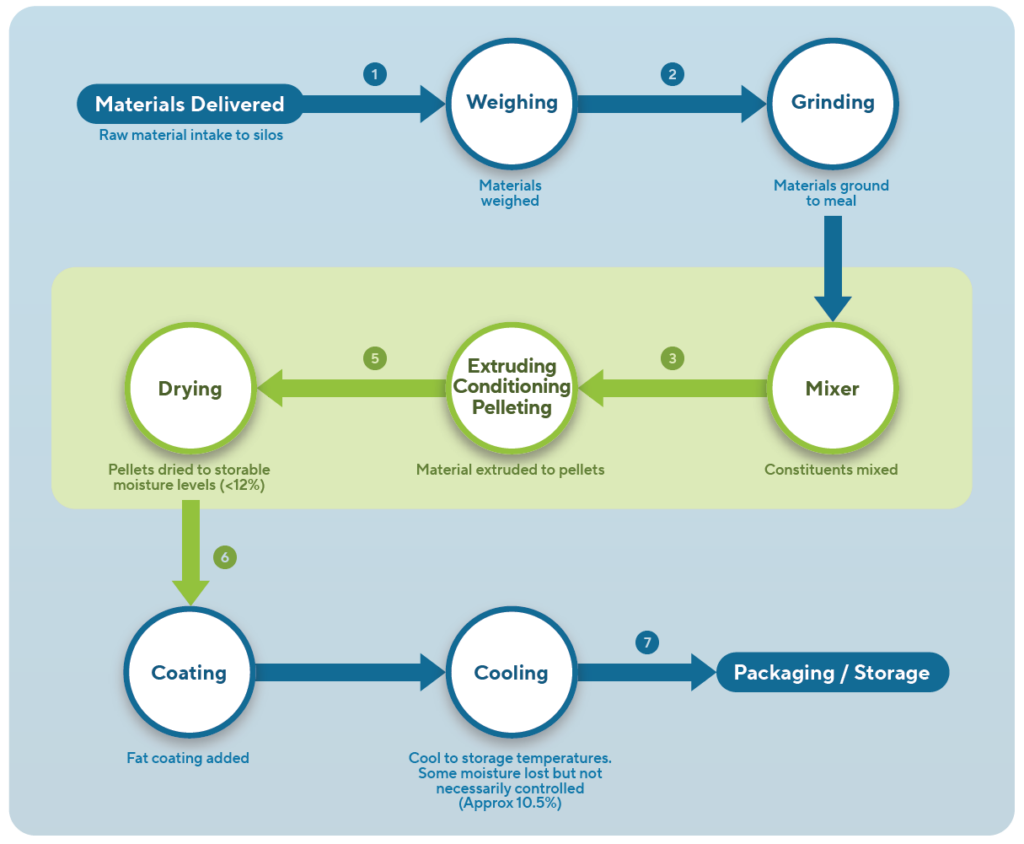
Effective moisture control of the whole process requires the installation of online moisture measurement sensors in various positions.
In figure 1, the green arrows show suggested sensor locations. The numbers within the arrows relate to each point below.
- Measurement between raw intake and storage silos avoids unsuitable incoming materials.
- Ensures raw materials are correctly proportioned, compensating for varying moisture levels in stored material.
- Grinding can remove varying amounts of moisture. It is more efficient at certain moisture contents and can reduce wear on the grinding machine.
- Measurement in the mixer allows the addition of water to ensure material is sent for conditioning and extrusion/pelleting.
- The measurement at the input of a dryer can be used as a process variable for feed-forward control.
- Measuring at the output of a dryer enables feedback control from the setpoint error.
- Measuring at output of cooler prior to packing/storage allows control of cooler parameters and final quality control check prior to storage.
Recommended Installation
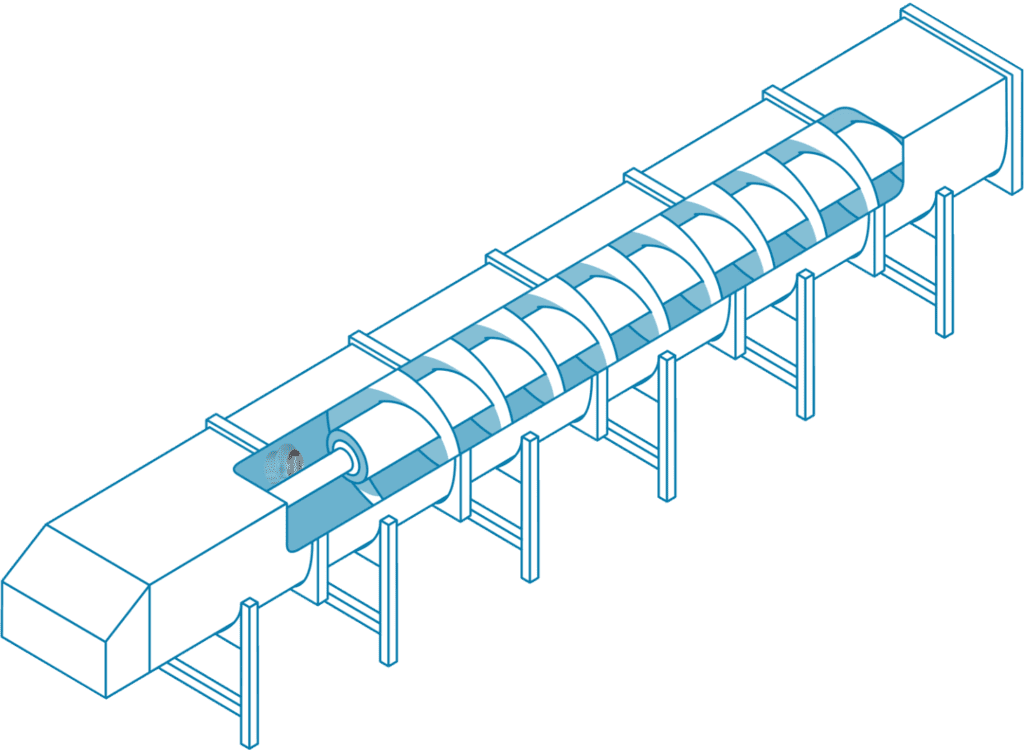
Conveyor
The sensor is mounted in the belly of the conveyor, at 30° from the underside and ideally before the sampling point.
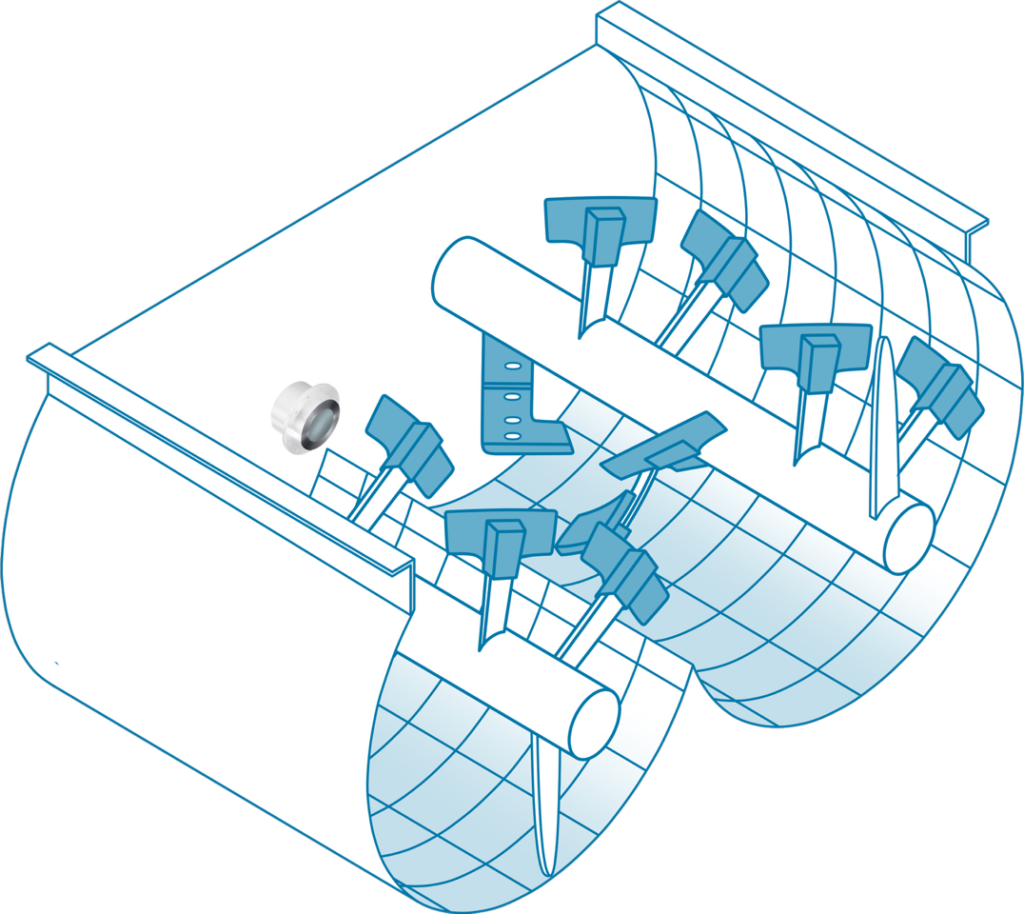
Mixer
The sensor is mounted flush with the mixer, either in the belly or the end wall.
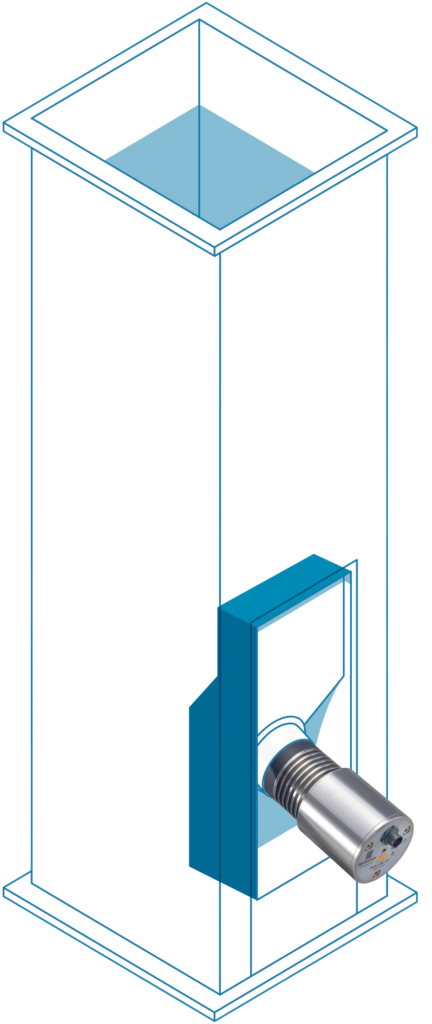
Hopper / Ducting System
The sensor is mounted in a hopper/ducting system, ensuring consistent flow and speed. The sensor can be mounted vertically or at an angle.
Why Hydronix?
Hydronix’s digital microwave moisture sensors are built specifically for reliable, real-time moisture measurement in demanding industrial processes. By measuring moisture continuously in flowing material, Hydronix sensors help operators maintain tighter control of product quality, reduce waste and rework, improve yield, and optimise energy and water use. The sensors are proven across a wide range of applications, including feed, grain, food, concrete, aggregates, and other bulk solids, and they are designed for straightforward integration with control systems. With fast response, robust construction, and no ongoing consumables or routine maintenance burden, Hydronix delivers dependable moisture data that helps manufacturers make better process decisions every day.
Hydro-Mix XT
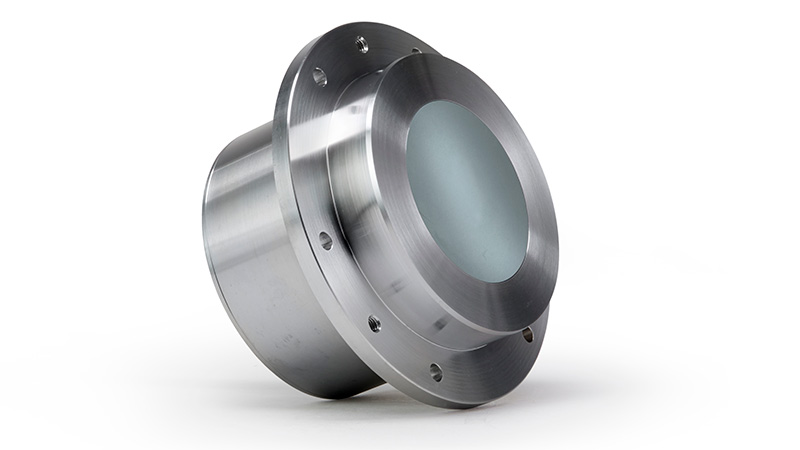
A compact, flush-mounted digital microwave moisture sensor with a hard-wearing ceramic faceplate and stainless steel body, designed for accurate real-time measurement in flowing materials. It is built for easy integration into mixers, ducting, and conveyors. The Hydro-Mix XT is also available for explosive atmosphere and for food safe requirements.
Hydro-Mix HT
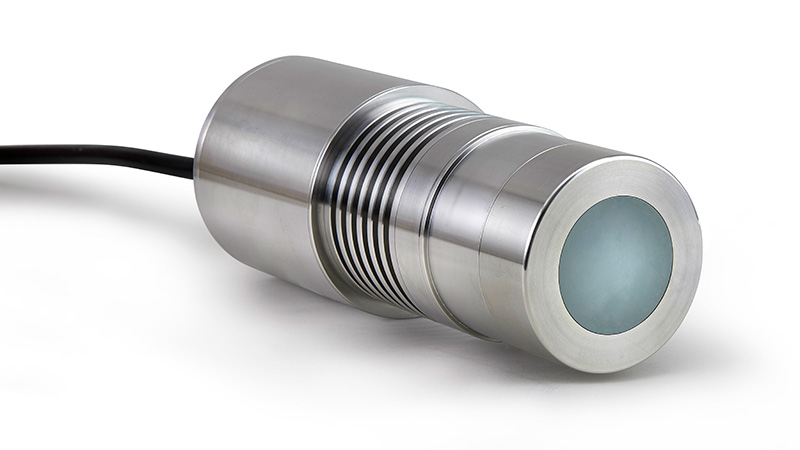
A high-temperature version of the Hydro-Mix XT, built to measure moisture in hotter processes with material temperatures up to 120°C while retaining the same robust flush-mounted design. The Hydro-Mix HT is also available for explosive atmosphere.
Industry Expert Opinion on Moisture Control
“The pelleting process is highly sensitive to excessive moisture content; high moisture causes rollers to slip and consequently creates machine blockages.”
Nils Lastein, Global Application Manager, Andritz, Denmark1
Conclusion

- Nils Lastein (September 2019), Aquafeed. Pelleting versus extrusion for shrimp feed manufacturing
https://www.aquafeed.co.uk/pelleting-versus-extrusion-for-shrimp-feed-manufacturing-21025/ ↩︎